

Difference Between a Digital Marketer and a Performance Marketer in 2026
Digital marketing has evolved significantly over the past few years. In 2026, businesses are no longer relying on a single marketing strategy to grow their brand. Instead, they are combining multiple digital channels, advanced analytics, automation tools, and customer-focused campaigns to achieve sustainable growth.
As competition continues to increase online, two roles have become especially important: the Digital Marketer and the Performance Marketer.
Although many people use these terms interchangeably, they are not the same. Both professionals work toward business growth, but their objectives, strategies, metrics, and day-to-day responsibilities differ considerably.
Understanding the difference is important for business owners, marketing professionals, students, and startups looking to build effective marketing teams.
In this article, we will explore the key differences between a Digital Marketer and a Performance Marketer in 2026, discuss current industry trends, and explain why businesses need both roles to achieve long-term success.
What is Digital Marketing?
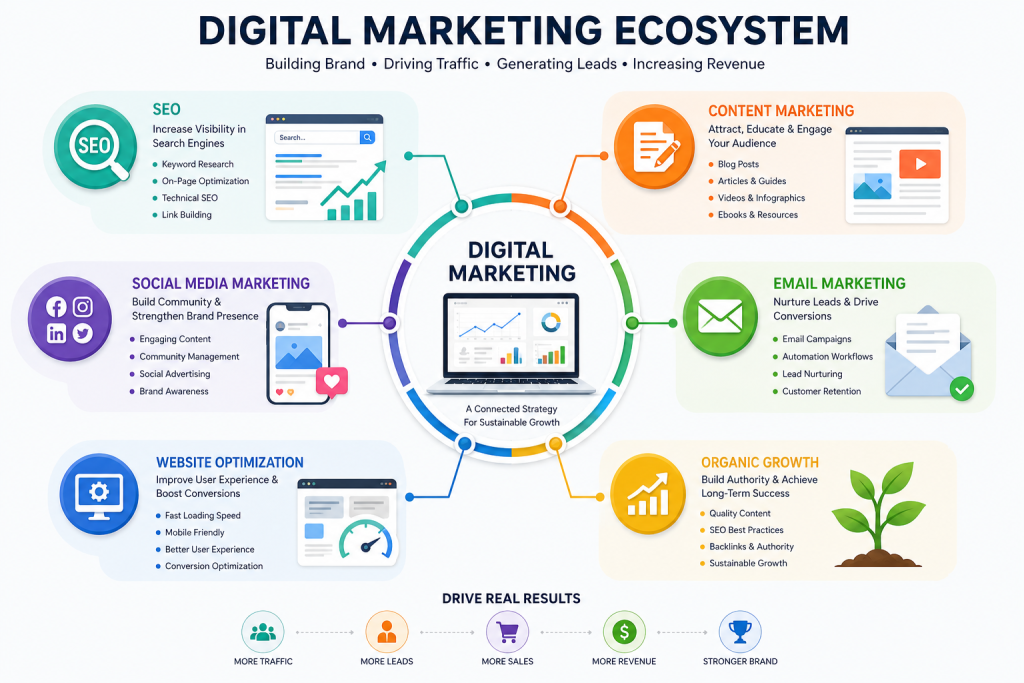
Digital marketing is a broad approach that focuses on promoting a business, brand, product, or service across various online channels.
A Digital Marketer is responsible for creating awareness, building trust, engaging audiences, and supporting the entire customer journey. Their goal is not only to generate immediate sales but also to establish a strong and recognizable brand presence.
Brand Awareness
One of the primary responsibilities of a Digital Marketer is increasing brand visibility. The more people recognize and trust a brand, the easier it becomes to generate leads and sales in the future.
Content Marketing
Content remains one of the most powerful marketing tools in 2026. Digital marketers create blogs, videos, infographics, guides, and social media content to educate and engage potential customers.
SEO (Search Engine Optimization)
SEO helps websites rank higher on search engines and attract organic traffic. A Digital Marketer focuses on keyword research, content optimization, technical SEO, and link-building strategies.
Businesses looking to improve online visibility often partner with a Digital Marketing Company in Surat to develop a comprehensive SEO and content marketing strategy.
Social Media Marketing
Digital marketers manage platforms such as Facebook, Instagram, LinkedIn, X, YouTube, and emerging social channels to connect with audiences and strengthen brand identity.
Email Marketing
Email remains a highly effective channel for customer engagement. Digital marketers create newsletters, promotional campaigns, and automated email sequences to nurture leads.
Website Optimization
A website serves as the foundation of digital marketing. Digital marketers work to improve user experience, site speed, content quality, and conversion paths.
Organic Growth
Unlike paid advertising, organic growth focuses on attracting visitors naturally through content, SEO, social engagement, and brand authority.
For businesses seeking long-term online growth, partnering with a Digital Marketing Company in Surat can help build sustainable digital assets that continue generating traffic and leads over time.
What is Performance Marketing?
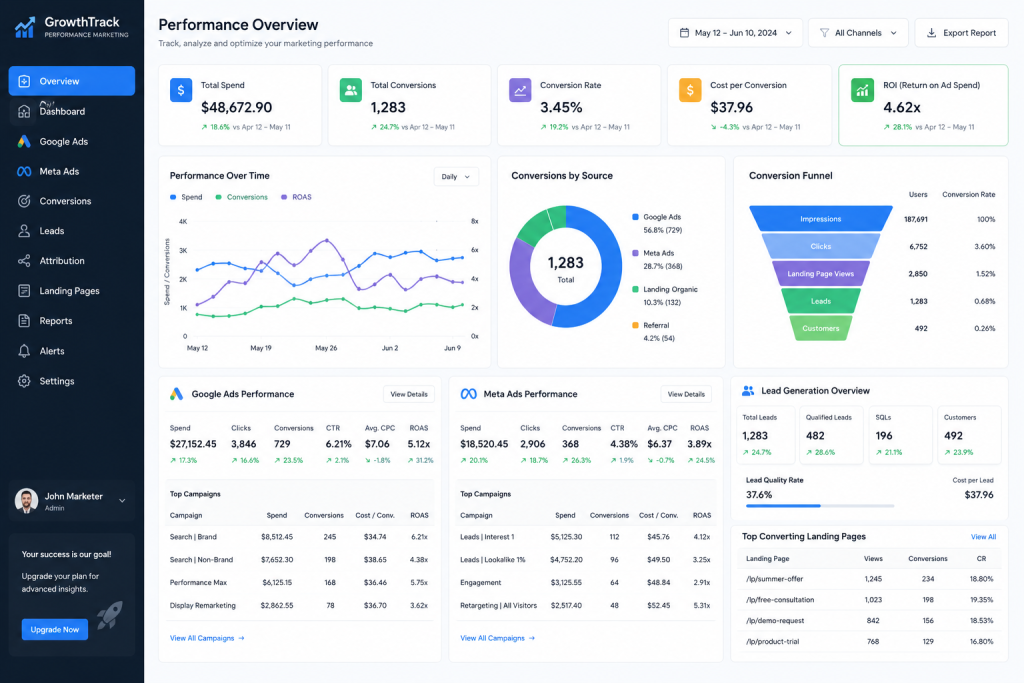
Performance marketing focuses on measurable outcomes and revenue generation.
A Performance Marketer is responsible for creating campaigns where every marketing activity is tracked and optimized based on specific business objectives.
The emphasis is not on impressions or awareness alone. Instead, performance marketers focus on metrics that directly impact business growth.
Paid Advertising
Performance marketers manage advertising campaigns across platforms such as Google Ads, Meta Ads, LinkedIn Ads, YouTube Ads, and other paid channels.
ROI-Focused Campaigns
Every campaign is measured based on return on investment (ROI). If a campaign is not profitable, it is optimized or replaced.
Lead Generation
Generating qualified leads is one of the primary objectives of performance marketing.
Conversion Tracking
Performance marketers rely heavily on conversion tracking systems to understand customer behavior and campaign effectiveness.
Data-Driven Marketing
Decisions are based on data rather than assumptions. Performance marketers continuously analyze campaign performance and optimize accordingly.
Revenue-Focused Strategies
The ultimate goal is measurable business growth, including leads, sales, subscriptions, purchases, and customer acquisition.
Key Differences Between a Digital Marketer and a Performance Marketer
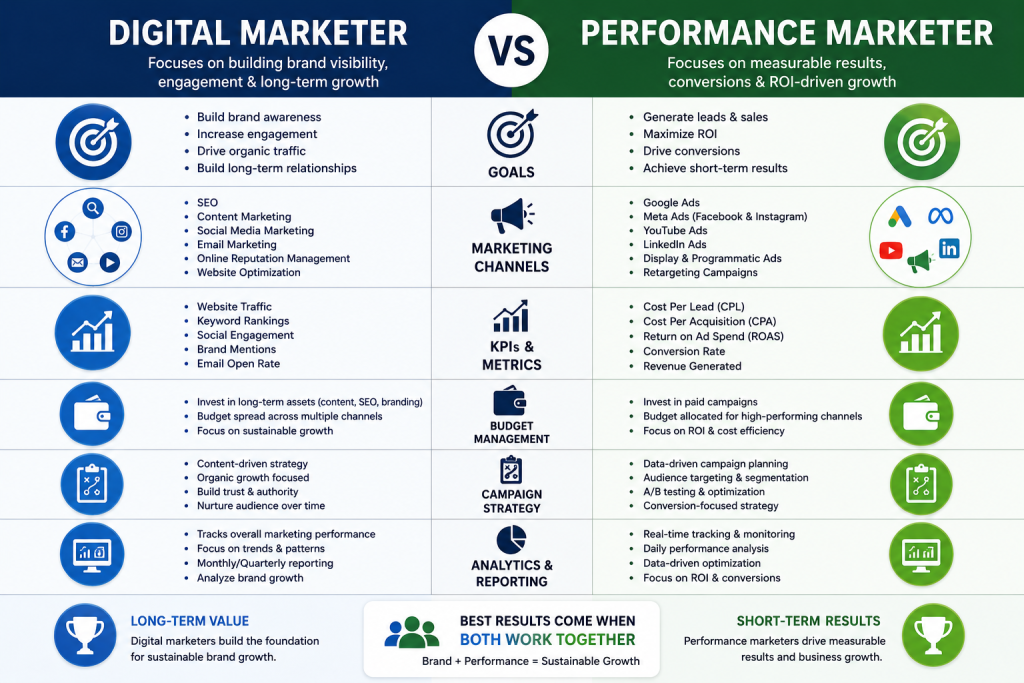
Goals and Objectives
A Digital Marketer focuses on building brand awareness, engagement, trust, and long-term growth.
A Performance Marketer focuses on generating measurable actions such as leads, sales, registrations, and purchases.
Marketing Channels
Digital marketers typically work across:
- SEO
- Content Marketing
- Social Media Marketing
- Email Marketing
- Website Optimization
- Online Reputation Management
Performance marketers typically focus on:
- Google Ads
- Meta Ads
- YouTube Ads
- LinkedIn Ads
- Programmatic Advertising
- Retargeting Campaigns
KPIs and Metrics
Digital Marketer KPIs:
- Website Traffic
- Social Engagement
- Keyword Rankings
- Brand Mentions
- Email Open Rates
Performance Marketer KPIs:
- Cost Per Lead (CPL)
- Cost Per Acquisition (CPA)
- Return on Ad Spend (ROAS)
- Conversion Rate
- Revenue Generated
Budget Management
Digital marketers often work with broader marketing budgets that support long-term brand growth.
Performance marketers manage advertising budgets with strict ROI expectations.
Campaign Strategy
Digital marketers build integrated strategies that strengthen brand positioning.
Performance marketers design campaigns specifically to drive conversions and revenue.
Skill Requirements
Digital Marketer Skills:
- SEO
- Content Strategy
- Social Media Management
- Email Marketing
- Branding
- Website Optimization
Performance Marketer Skills:
- Google Ads Management
- Meta Ads Management
- Conversion Tracking
- Analytics
- Data Interpretation
- Landing Page Optimization
Reporting and Analytics
Digital marketers evaluate overall brand growth and engagement.
Performance marketers analyze campaign-level metrics daily and make data-driven adjustments.
Long-Term vs Short-Term Growth
Digital marketing supports sustainable long-term growth.
Performance marketing generates faster results and immediate business outcomes.
Why Businesses Need Both in 2026
The most successful companies understand that brand building and revenue generation work together.
Digital marketing helps businesses:
- Build trust
- Increase visibility
- Establish authority
- Grow organic traffic
Performance marketing helps businesses:
- Generate leads
- Increase sales
- Improve ROI
- Scale growth faster
A strong brand makes advertising more effective, while successful advertising accelerates business growth.
Businesses interested in understanding the complete relationship between both disciplines can explore the detailed guide on the Difference of Digital Marketing and Performance Marketing.
The companies achieving the best results in 2026 are those combining both strategies rather than choosing one over the other.
How AI is Changing Both Roles in 2026
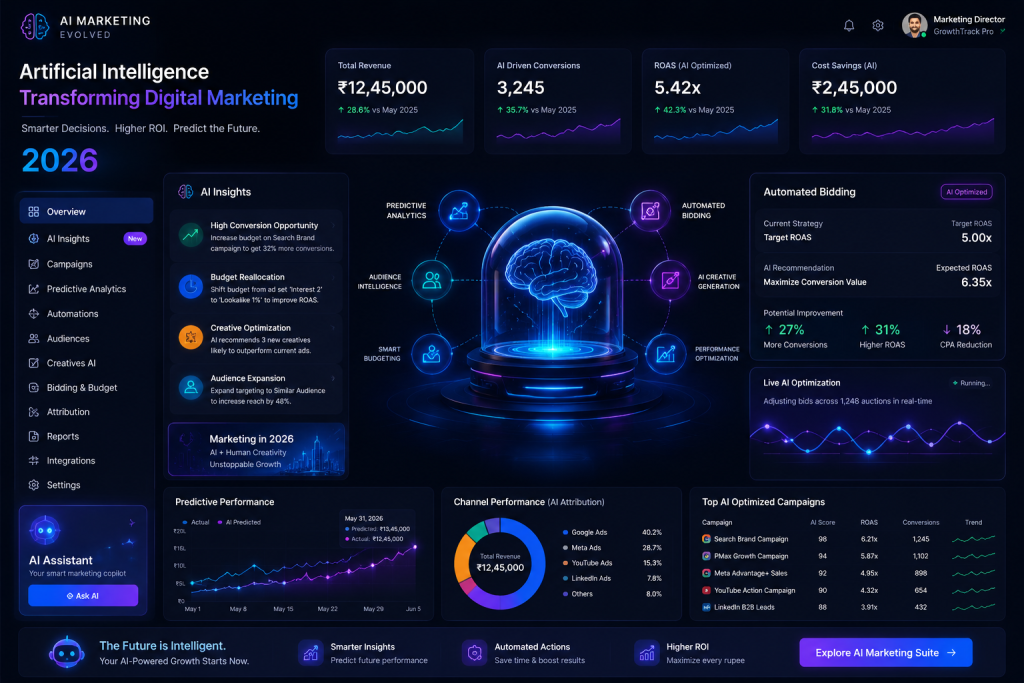
Artificial intelligence has transformed the marketing industry.
AI-Powered Ad Optimization
Advertising platforms now automatically optimize audience targeting and campaign delivery.
Automated Bidding
AI systems adjust bids in real time to maximize campaign performance.
Predictive Analytics
Marketers can predict customer behavior using historical and real-time data.
Content Personalization
AI helps deliver highly personalized experiences based on user preferences and behavior.
Marketing Automation
Automated workflows improve lead nurturing, customer communication, and campaign efficiency.
Businesses interested in future marketing trends should also read How AI is Transforming Digital Marketing in 2026 to understand how technology is reshaping customer acquisition and engagement strategies.
Career Opportunities in 2026
Marketing remains one of the fastest-growing industries globally.
Digital Marketing Career Path
Common roles include:
- SEO Specialist
- Content Marketer
- Social Media Manager
- Email Marketing Specialist
- Digital Marketing Manager
Performance Marketing Career Path
Popular roles include:
- Performance Marketing Executive
- PPC Specialist
- Google Ads Expert
- Meta Ads Specialist
- Growth Marketing Manager
Salary Trends
Professionals with expertise in analytics, automation, and paid advertising continue to command higher salaries across global markets.
Skills in Demand
The most sought-after skills in 2026 include:
- SEO
- Google Ads
- Meta Ads
- Analytics
- Conversion Optimization
- Marketing Automation
- Data Analysis
- Content Strategy
Aspiring professionals can learn more from the guide How to Build a Successful Career in Digital Marketing? to develop a structured roadmap for entering the industry.
Why Businesses Choose Technovein
Technovein.com has established itself as a trusted digital marketing partner for businesses seeking measurable online growth.
Global Marketing Experience
Technovein.com serves clients across:
- USA
- Australia
- UK
- Canada
- UAE
- Dubai
- Malaysia
- India
- Other international markets
Affordable Advertising Solutions
Businesses benefit from cost-effective campaign management without compromising performance.
ROI-Focused Campaigns
Every strategy is designed with measurable business outcomes in mind.
Transparent Reporting
Clients receive detailed performance reports and actionable insights.
Customized Marketing Strategies
Solutions are tailored to startups, SMEs, and large enterprises based on their goals and budgets.
Businesses looking for specialized advertising support can work with a Google Ads Agency in Surat to improve campaign performance and lead generation.
Brands seeking social advertising expertise can partner with a Meta Ads Agency in Surat to scale customer acquisition through Facebook and Instagram advertising.
Companies focused on engagement and brand building can benefit from a Social Media Marketing Company in Surat to strengthen their online presence and audience relationships.
Frequently Asked Questions (FAQ)
Is digital marketing the same as performance marketing?
No. Digital marketing covers all online marketing activities, while performance marketing focuses specifically on measurable results such as leads and sales.
Which career is better in 2026?
Both offer excellent opportunities. Your choice depends on whether you prefer brand-building strategies or data-driven advertising campaigns.
Can a digital marketer become a performance marketer?
Yes. Many digital marketers expand their skills into paid advertising and performance optimization.
Is performance marketing only about paid ads?
Primarily yes, but it also includes conversion optimization, tracking, analytics, and customer acquisition strategies.
Which is better for business growth?
The best approach combines both digital marketing and performance marketing.
Do small businesses need performance marketing?
Yes. Performance marketing helps small businesses generate measurable leads and sales efficiently.
Is SEO part of performance marketing?
SEO is generally considered a digital marketing strategy, although its performance can also be measured through conversions and revenue.
What tools do performance marketers use?
Common tools include Google Ads, Google Analytics, Meta Ads Manager, Tag Manager, CRM systems, and reporting dashboards.
Is digital marketing still relevant in 2026?
Absolutely. Digital marketing remains essential for brand visibility, customer engagement, and long-term growth.
What skills should marketers learn in 2026?
SEO, paid advertising, analytics, marketing automation, conversion optimization, and content marketing are among the most valuable skills.
Conclusion
The difference between a Digital Marketer and a Performance Marketer in 2026 comes down to objectives, strategies, and measurement.
Digital marketers focus on brand awareness, customer engagement, content, SEO, and long-term growth. Performance marketers focus on measurable outcomes such as leads, sales, conversions, and return on investment.
Neither role is more important than the other. Businesses that combine strong digital marketing foundations with performance-driven advertising strategies are achieving the highest levels of growth in today’s competitive landscape.
As marketing continues to evolve, companies that integrate branding, content, SEO, analytics, and paid advertising into a unified strategy will be best positioned for sustainable success in 2026 and beyond.

Leave a Reply
You must be logged in to post a comment.